When you buy one of the cheapest houses, it is easy to focus only on repairs and basics. Yet a few thoughtful design choices can completely change how the place feels without blowing your budget. With the right surfaces and lighting, even a tired room starts to look warmer, more welcoming, and more “yours.”
In this article, we will look at simple ideas that add character to low-cost homes. The focus is on things you can do gradually, at your own pace, using a mix of DIY and affordable upgrades, with practical touches like decorative panels for homes, helping you get more from every wall without a full renovation.
Start With One Main Room
If the whole house feels dated, start small. Pick one room that you use every day. This is often the living room, a combined kitchen and dining space, or the bedroom you sleep in. Giving just one area a clear look and layout will already make living in a cheap house feel more comfortable.
Look at what you can keep and what needs a quick fix. Sometimes cleaning, painting, and rearranging furniture makes more of a difference than buying new pieces. Neutral wall colours, a few key light sources, and one or two focal surfaces are often enough to change the mood of the room.
Use Decorative Panels To Lift Plain Walls
Many low-cost properties have uneven plaster, patchy paint, or odd repairs that make walls look messy. Covering everything can be expensive, but you do not always need to. In many cases, one improved wall can anchor the whole space.
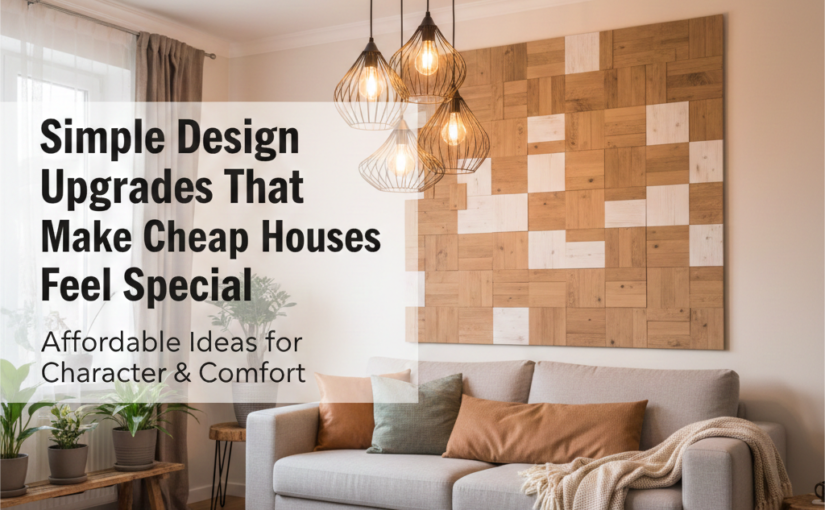
This is where decorative panels for homes can help. They add texture and pattern, hide minor flaws, and make a plain wall look intentional, while also offering extra durability and easier cleaning in busy rooms. You can use them to frame a seating area in the living room, create a backdrop for a bed, or define a dining corner. Because they come in different finishes, from wood looks to darker tones, it is easy to match them to the style you want.
In very small houses, a single panelled wall often works better than lots of small decor items. It keeps the room calm and draws the eye to one strong feature instead of visual clutter everywhere.
Add Warmth And Focus With Luxury Ceiling Lights
Old ceiling fittings can make even a freshly painted room feel tired. In cheaper houses, you often find bare bulbs or dated shades that throw harsh light and highlight every flaw. Changing these makes a bigger difference than many people expect.
Most commonly, a vintage-inspired luxury ceiling lights are a simple way to refresh a space and control how it feels at different times of day, even if the rest of the finishes are basic. In a living room, a well-designed ceiling light with softer, diffused output can make evenings feel calmer and more refined, while in a kitchen, a clear but attractive lamp over a table or island turns it into a proper eating or work spot. In bedrooms, a quality overhead light that works with bedside lamps keeps the room cosy instead of cold and helps the whole space feel more considered than its price tag might suggest.
Try to think in layers. The ceiling light gives general brightness, while smaller lamps, wall lights, or even candles add pockets of softer light in the corners. This layered approach works especially well when your house has simple finishes, but you still want it to feel inviting.
Play With Colour And Texture On A Budget
You do not need expensive materials to add interest. In fact, simple, repeated touches tend to work better in budget homes. The key is to mix a few textures and colours that work together rather than buying lots of different things.
Some easy ideas:
- Use one main wall colour throughout the small house to make it feel more connected, then add colour with cushions, throws, and art.
- Combine smooth painted walls with one textured surface, such as brick, stone effect, or panelling, to avoid a flat look.
- Bring in soft textiles such as rugs and curtains to cover old floors and change how sound carries in echoey rooms.
If you like bolder patterns, pick one area to show them off, such as a rug under the coffee table or a patterned curtain in the living room, and keep the rest calm. This keeps the house feeling lively but not chaotic.
Reuse And Rework What You Already Have
In cheap houses, money often has to go toward leaks, wiring, and heating. That leaves less for furniture and finishes, but it also opens the door for creative fixes. Many older pieces are solid and just need a little care to feel fresh again.
You can repaint a worn chest of drawers, swap knobs on old cupboards, or cut down a large table to fit a tight dining corner. Old doors or shutters can turn into headboards, and leftover timber boards can become simple shelves. These small projects keep costs down and give your home personality that new flat pack furniture sometimes lacks.
Try to look at each item for its shape and structure rather than its current colour or finish. If the lines are good and it is sturdy, it may be worth saving.
Use Plants And Small Details To Soften Hard Edges
Cheap houses sometimes feel harsh because of hard floors, bare walls, or basic finishes. Plants and a few personal items can change that feeling quickly. Even in a very small home, a bit of greenery adds life and improves how the space feels.
You do not need a full garden. A couple of pots by the front door, herbs on a kitchen windowsill, or a tall plant in an empty corner lightens the room and breaks up straight lines. Mix them with simple details like framed prints, a few books, and textiles you actually use, such as blankets and cushions. This mix of living elements and useful objects stops the house from feeling like a building site and starts to make it feel like a home.
Let Each Upgrade Support Daily Life
When you are working with one of the cheapest houses, every change should make daily life easier, not just look good in photos. A panelled wall that hides marks and lets you rest your furniture against it without worry, or a ceiling lamp that lights your table so you can eat, work, and talk there comfortably, all carry real value.
As you plan, ask simple questions. Will this help me use the room better? Will it hold up to daily wear? Does it fit with the other choices I have already made? When the answer is yes, you are likely on the right track.
With a mix of decorative panels for homes, well-chosen luxury ceiling lights, and a few personal touches from residence supply, even very low-cost houses can feel charming and practical. Over time, each small improvement builds on the last one, turning a basic property into a place that truly fits you.